Context: In 2020, Southwest Key Programs had a public image problem. After 4 years of the Trump Administration putting the phrase “Kids in Cages” in the mind of millions of people — and lockdowns getting people addicted to screens and 24-hour news cycles — people were regularly confusing their unaccompanied minor shelters for ICE detention centers. I joined just in time to help rehabilitate that image through a series of informative blog articles, with a selection listed below.
Contributions: Research, Interviews, Draft Copy, Revisions, and Layout
Results: A decrease in social media harassment, greater understanding of the Southwest Key mission in the public, and a library of explainer articles for each division of the non-profit.
5 Reasons You Should Vote (Even If You Think It Doesn’t Matter)
For a lot of people, voting is a serious civic duty. They show up to the polls on election day, they know exactly who and what they’re voting for, and they leave the polling place with a sense of pride.
But for many others, voting can be viewed as too much of a hassle, too much pressure, or a useless endeavor. There are a lot of reasons why people don’t vote, but we believe it’s important to ensure everyone’s voices are heard on election day.
So we put together a short list of reasons why your vote really does matter—and a little bit of insight into why.
Your vote makes a difference.
It might feel like your vote won’t matter, but it will make a difference, especially in local and state elections. It’s easy to get lost in the big numbers shown on the news about federal representatives and the electoral college, but there are plenty of cases where a small number of votes have decided elections.
Consider this list of close races from NPR, including a state representative seat in 2018 that was decided by exactly one vote. Or a Vermont state Senate Democratic primary in 2017 that was determined by a single vote out of more than 7,400 total. If you look at races that were decided by a handful more votes, you’ll see plenty of examples in the last ten years, and that doesn’t even begin to cover elections in the past century!
The winner of the election will represent you anyway.
Voting for a candidate isn’t an endorsement, it’s a preference. It’s rare to agree with a candidate on every issue, but it’s important to make sure they know what issues you care about. There’s usually one candidate who represents your interests better than the others.
When you choose not to vote, you’re letting others decide who gets to make and enforce laws as your representative. There’s usually going to be one person on the ballot who’s a better fit than the others and you should play an active role in deciding who that is.
It’s never been easier to register to vote.
Most states offer the ability to register to vote online, and the process takes less than five minutes. You can vote in U.S. elections if you:
You may not realize it, but your life is affected by government, laws, and elected representatives every day. We think that Common Cause put it best when they said:
“There is not a single aspect of daily life that isn’t affected by your government. The roads you drive on, the air you breathe, the water you drink, the food you eat, the schools that teach your children, and the parks you visit — are all a function of government.”
There are people making decisions that affect your life and you have the power to choose who’s making these decisions on your behalf. They must answer to you, not the other way around.
People fought for the right to vote for a reason.
We get it. Life is complicated and it’s a struggle to fit it all into your schedule. But voting is one of the few chances you can have a direct impact on your community. There wouldn’t have been a women’s suffrage movement or a 24th amendment if voting didn’t matter.
Take advantage of the tools that your state and county provide for you. Most ballots include short summaries of candidates’ beliefs and stances on issues, as well as short descriptions of ballot measures and their effects.
If you’re having trouble deciding, consider reviewing a ballot guide before the election. Sometimes, these are available at the polling station. Try choosing your top three issues or concerns with government and look for candidates who line up with those priorities.
Every election feels like it’s going to be the most important election in American history, but one thing remains constant: Voting is an important and valuable civic right. There’s never been a better time to make sure your voice is heard.
Visit Vote.org to register and make a #VoteReady plan.
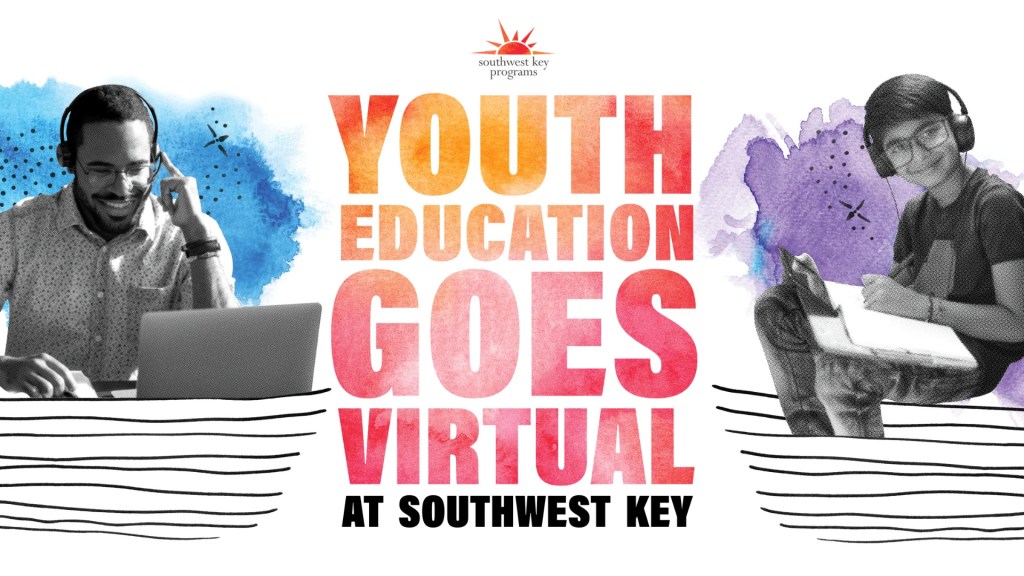
Launching Virtual Education at Southwest Key Shelters
It’s Monday morning. You’re getting ready for your English class. You grab your tablet and swipe your fingers across the screen to open your classroom app. Your teacher’s bitmoji avatar appears and begins the lesson.
That’s the experience of education in 2020, whether a student is learning at home or in one of our shelters.
Education is a huge part of life at Southwest Key; something we’re passionate and excited to provide to the youth in our care. Many of the children in our shelters have never had the opportunity to enter a classroom, and they love to gather in their classrooms for each lesson. Each child receives 6 hours of education every weekday in line with federal standards. We strive to make this time engaging and valuable because we believe so strongly in the value of education. We believe education allows for greater opportunities for youth once they’re unified and begin their lives in the U.S.
But in 2020, education at Southwest Key needed to go virtual—and fast.
When COVID-19 began spreading across the United States, shelters needed to adapt education for social distancing while still providing the requisite education hours each week. On top of that, youth just arriving at the shelter needed a way to start learning while they went through the medical isolation process required to ensure they weren’t carrying the virus. This is also an important time when the youth’s current level of education is analyzed, so that they can be placed in the correct English course, for example.
It was a tall task, but fortunately, Lead Teacher Diana Peloso and Regional Director of Education Ana Navarro were on the case.
Going Virtual
Diana and Ana quickly put together a team to work on Casa San Diego’s response to CDC guidelines and recommendations for COVID-19 prevention. At first, it was brand new territory with very little information to go on. “There were two main goals: First, we had to provide a virtual experience for youth who had just arrived at the shelter,” Diana said. “Then, we had to look into how to take our current education routine online for the whole class—and the teacher.”
Diana and Ana worked with Southwest Key’s Risk and Safety team to create a pilot program and participated in a virtual conference with the University of Texas at San Antonio about making lessons interactive through technology. When the CDC provided guidelines for classrooms and schools in July, Diana found herself researching entirely new topics. Things like how to sanitize textbooks after a student uses one in class.
“Diana became the guru of our virtual world. She had to implement technology quickly and efficiently. With the help of her online education guide, all our shelters have been able to follow her lead and go virtual for their classes.”
Ana Navarro Regional Director of Education
How Does It Work?
So how do these virtual lessons work? After a digital presentation introducing newly-arrived youth to life at Southwest Key, students join virtual classrooms.
“We decided to go with printed materials that students could use to follow along with a teacher sharing information one-to-one,” Diana said. The teachers even have bitmoji avatars they use to share a bit of personality in their lessons.
From there, the use of technology evolved from simple one-on-one lessons to group sessions where a teacher would sit with five or six students on a group call. Now, students participate in remote study sessions, where students work together to prepare for an upcoming project or exam. Staff have even noticed that through virtual learning, students are becoming more familiar with English terms.
But what did students think of these changes? In short, they loved the new technology-enhanced lessons.
“We’ve had a tremendous response of engagement from the students. We have daily check-ins with students and 100% of student survey responses have been positive. We’re always looking for opportunities to grow and evolve the lessons, too.”
Diana Peloso Lead Teacher
Looking Ahead
“Being in the pandemic has opened up a lot of new horizons for us,” Ana said. “We always had the idea of doing something like this for intake, but COVID made it a top priority. We’ve taken a step toward the future of education by necessity, but I’m glad we’re moving toward it.”
Diana agreed. “Even in a world without COVID, you can’t just get comfortable, the old methods won’t work forever. There’s always room for innovation and evolution for education.”
Almost all the program models in Southwest Key’s Youth and Family division are “community-based programs,” which focus on keeping at-risk youth and their families in their communities where they can thrive. The phrase can have a few definitions, each depending on context. Sometimes they’re tied to long-term healthcare providers or Medicaid services — but we’re going to stick with the definition used by social workers and other experts in our industry. From Functional Family Therapy to Evening Reporting Centers, these programs understand the value of a strong community and its ability to help everyone succeed.
Defining Community-Based Programs
Southwest Key connects youth and families with several important community supports, each unique to their needs and availability of local resources. So, what do we mean when we say “Community-Based?” We are strengthening the connection between youth, their families, and their local community resources. Specifically, resources they can access even after we’ve stopped providing services. Resources can be natural or formal support, such as counseling services, recreational experiences, housing support and healthcare. These are provided by local organizations or led by individual leaders in the community. In addition, our services are primarily provided in the home during non-traditional work hours — so we can better meet their needs.
Why is it important to connect clients to these resources?
They are far more effective at reducing recidivism, which is the tendency to relapse into a previous condition or mode of behavior, especially criminal behavior. Most of our Youth and Family Services programs see over 80% of our clients remain free of new charges, with some programs even reaching 95%.
Community-Based Programs for Juveniles
Southwest Key Youth and Family Services programs focus on helping at-risk youth and their families thrive in their communities. This is where Southwest Key started in 1987, and it is one of the oldest and most successful program areas of our organization. We don’t love the term “juvenile,” because it tends to oversimplify the experience of youth involved in the justice system, but most of our programs work with system-involved youth that others would use the term “juvenile” to describe.
Youth who get more support from their families and their communities are more likely to maintain their positive habits and much less likely to re-offend.
This support can come directly from families, schools, local religious and charitable organizations or local partner organizations.
In addition to reducing recidivism, these programs also help youth become more accountable for their actions, learn valuable life skills, help improve their relationships and increase their problem-solving skills.
Examples of Community-Based Programs
Community-based programs can take many forms, and Southwest Key has several under its umbrella, including:
Functional Family Therapy (FFT) — A three- to four-month in-home family-based therapeutic program for youth and their families. FFT is designed to enhance healthy family dynamics through improved communication and accountability, which in turn reduces delinquent behavior and increases overall family well-being.
Youth Mentoring — Youth mentors are matched with mentees who meet them weekly for social and learning activities. Mentoring can be provided one-on-one or in a group format.
Evening Reporting Centers — This after-school program is designed to provide structure and supervision to system-involved youth, including free snacks and family-style meals, recreation, educational support and skills training.
Youth Tracking Services — A program designed to keep youth at home and out of detention facilities as they await court disposition, with an emphasis on accountability and support.
Community Connections – A comprehensive program for system-involved youth and families with high needs. This program offers therapeutic interventions, case management, skill- building and supervision. These services work well with youth at high risk of out-of-home placement or for youth returning home from placement.
Family Keys – An intensive short-term case management program primarily for youth who are not system involved but at risk due to family conflict, truancy or other identified high-risk behavior. Families are provided crisis stabilization, case management and case coordination.
How Southwest Key Provides Community-Based Care
How exactly does the community get involved in each of these programs, along with all the others?
Natural Community Resources — We recognize that each community is unique and a one-size-fits-all solution is rarely effective, so we seek and engage local natural resources and connect them with youth and families who need them most.
Keeping Youth in Their Homes — Taking youth and children out of the home affects their ability to build or maintain positive relationships with family, schools and peers. Removing them from their homes and communities often results in greater damage to the child. We work with the youth and families to build a network of support to allow the youth to safely remain at home.
Partnerships for Success — Community-based care goes beyond connecting individuals, it can connect youth and families with entire organizations. This includes local businesses making charitable donations or providing opportunities to develop new skills, higher education institutions providing interns or educational opportunities, or other social services organizations meeting gaps in services.
Communities are more than a single location, culture, or group of people. They are all those things — and more! Community engagement and support help encourage positive behaviors, reduce recidivism, and most importantly, help youth and families thrive.



 Eric Chase